Balance Privacy with Useful Light
Urban gardens face a twin challenge: neighboring windows look down from multiple angles during the day, and unlit boundary walls vanish into a dark void at night. If you react by erecting solid high fences around the whole perimeter, you trap cold damp air and plunge your ground floor into deep shade. By combining targeted sightline screens during the day with shielded, warm-white perimeter lighting after sunset, your garden feels sheltered yet open.
MAP MY SMALL SPACE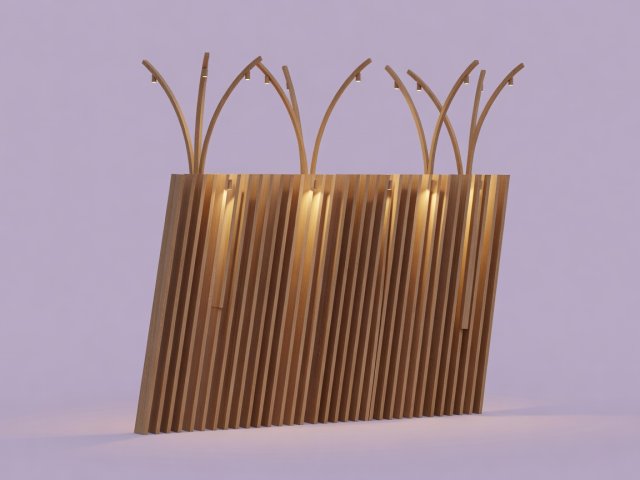
Part 1: Sightline Geometry & Permeable Screens
In most jurisdictions (including UK Permitted Development rules), boundary fences behind a house are capped at 2.0 meters (approx. 6 ft 6 in) without planning permission. When a neighbor's second-story bedroom window looks down at a 35-degree angle, a 2.0m fence on the distant boundary line sits completely below that line of sight.
-
Move the Screen Toward the Viewer: By geometry, a 2.0m-high open pergola beam or slatted screen placed just 1.2m away from your seated head position (seated eye height ~1.15m) blocks a 35-degree downward view that would otherwise require a 3.4m wall on the boundary.
-
Maintain 30%–50% Open Air Gap: Solid fences force wind upward and drop it as a swirling vortex inside small yards. Slatted cedar louvres, laser-cut weathered steel panels with 40% perforation, or airy multi-stem trees slow wind gently without turbulence.
-
Elevated Canopy Screening: Planting a clear-stemmed Amelanchier, Betula utilis var. jacquemontii, or pleached hornbeam (Carpinus betulus) puts the leafy screen between 1.8m and 3.2m high—exactly where upper windows look—while leaving the ground level bright and open.
Part 2: Low-Glare Outdoor Lighting Architecture
Because our eyes adapt to the brightest point in view, seeing a bare LED diode or bright wall floodlight causes pupils to constrict, making the rest of the garden appear pitch black. Furthermore, interior glass doors act as mirrors at night unless surfaces outside the glass are gently illuminated.
Illuminating a textured vertical surface at the rear of the yard (such as a fern wall or slatted cedar screen) with a soft 150-lumen wash cancels indoor window reflection and doubles the perceived evening depth of your living room.
Follow DarkSky International guidelines: use fully shielded downward optics, stick to 2200K–2700K warm amber-white spectrums (minimizing blue wavelengths that disrupt nocturnal moths), and wire lights to a dusk-to-11pm timer.
Small-Plot Lighting Fixture & IP Rating Guide
A 20-square-meter courtyard needs only four to six low-wattage fixtures (totalling under 18 watts) to feel inviting and safe underfoot:
| Zone & Task | Fixture Type | Output & Color Temp | Min. IP Rating | Placement Height & Aim |
|---|---|---|---|---|
| Step Risers & Level Changes | Recessed Eyelid / Hooded Marker | 1W – 2W (80–120 lm), 2700K | IP65 / IP67 | 100mm–150mm above tread, aimed 45° downward across stone |
| Built-In L-Bench & Trough Lip | Silicone-Encased Linear LED Tape | 4.8W/m (300 lm/m), 2400K–2700K | IP67 | Tucked inside 25mm aluminium diffuser channel under seat overhang |
| Rear Focal Specimen / Trellis | Honeycomb-Louvred Micro Spike Spot | 3W (220 lm), 2700K, 36° beam | IP67 | Set at base of rear planter grazing upward along bark/stems (never across neighbor windows) |
| Dining Table / Bistro Corner | Rechargeable Portable Table Lantern or Festoon | 1.5W dimmable (100 lm), 2200K | IP54 / IP65 | Below seated eye height on table surface to keep faces softly lit |